

The Democratic Republic of Congo (DRC) is undertaking major health reforms to achieve Universal Health Coverage (UHC). Through its 2021–2023 Government Action Programme and National Strategic Development Plan, the government aims to expand health protection and reduce inequalities by 2030. The Ministry of Health has also launched a digital health investment roadmap to strengthen community-level systems and equip health workers with digital tools.
Despite these efforts, rural communities continue to face significant health inequities driven by extreme poverty, poor infrastructure, food insecurity, and limited access to essential medicines. Community health services largely rely on unpaid volunteers, leading to fragmented and inconsistent care.
This situation contributes to persistently poor health outcomes. For example, the Ministry’s nutrition authorities report that 42% of children in the DRC are chronically stunted, with malnutrition contributing to nearly 45% of deaths in children under five.
With over 20 years of experience in sub-Saharan Africa, m2m brings expertise in delivering scalable, high-impact community health interventions that directly address the DRC’s urgent need to professionalise its community health workforce.
m2m has been invited by the Government of the DRC to provide technical assistance, advice, and services supporting the achievement of UHC through integrated, community-based primary healthcare. Our work focuses on:
- Contributing to the development of the national community health strategy
- Collaborating with national and international partners to standardise and improve CHW training, targeting key health issues such as malnutrition, HIV, TB, malaria, diabetes, and sexual and reproductive health
These focus areas are underpinned by two strategic objectives that guide our approach and ensure long-term, sustainable impact within the community health system:
m2m’s Approach to Health Systems Strengthening (HSS)
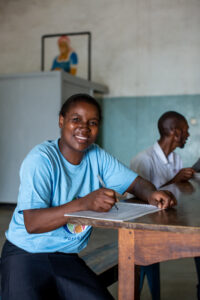 Health systems strengthening is a core pillar of m2m’s 2022–2026 Strategic Plan. Aligned with the World Health Organization’s six building blocks—service delivery, health workforce, health information systems, access to essential medicines, financing, and leadership/ governance—we support governments across sub-Saharan Africa to build strong, resilient, and sustainable health systems.
As more African countries work toward professionalising CHW programmes—aligned with the African Union’s vision to deploy 2 million additional CHWs, m2m is committed to playing our part. We provide targeted technical assistance in specific areas required to unlock the full benefit of CHWs—digital health, monitoring and evaluation, and standardisation of training. We also advocate for and help develop evidence-based policies.
m2m has a proven track record of health systems strengthening. Our Mentor Mother Model has been integrated into national health policies in countries including South Africa, Mozambique, and Kenya, and we have partnered with numerous national and provincial governments to build sustainable, quality systems. Through active memberships in coalitions such as the Community Health Impact Coalition (CHIC) and the Frontline Health Workers Coalition (FHWC), we continue to champion CHW professionalisation and influence policy and influence policy.