

Background
Nigeria, located on Africa’s western coast, is a diverse federation comprising of 36 states and the Federal Capital Territory (FCT). The country is home to around 250 ethnic groups and over 525 native languages, reflecting a rich cultural tapestry. However, Nigeria also faces critical public health challenges, particularly in maternal and child health.
According to UNAIDS, Nigeria’s HIV prevalence rate is 1.3% (15-49 years) and 1.9 million people are estimated to be living HIV. It also recorded a mother-to-child transmission rate of 23% in 2023, making it a major contributor to new HIV infections among children worldwide. Additionally, Nigeria reports a maternal mortality ratio of 512 deaths per 100,000 live births, ranking it among the highest in the world.
Key Country Data
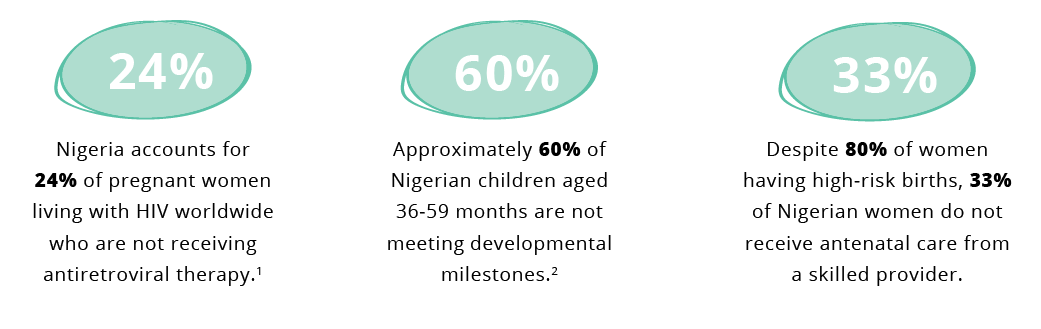
1. UNAIDS 2023. 2. UNICEF, 2022. 3. Demographic and Health Survey, 2022
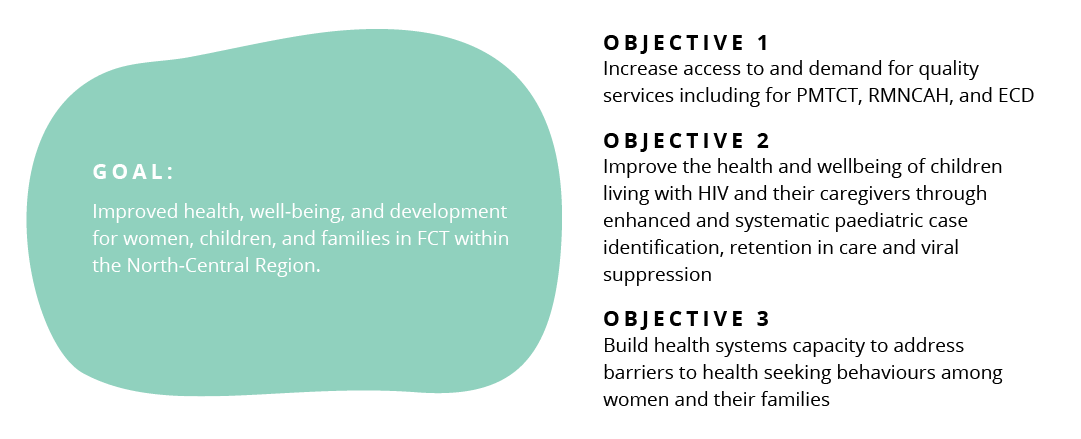
Project Goals and Objectives
How will m2m achieve this
To achieve its objectives in Nigeria, m2m will be leveraging its proven Mentor Mother Model by providing comprehensive, integrated primary health care services. Starting in the FCT, m2m is focusing on preventing mother-to-child transmission of HIV, improving RMNCH, and enhancing ECD. By strategically placing Mentor Mothers—women from local communities—in Bwari and Gwagwalada and in surrounding communities, m2m is ensuring that families receive culturally relevant, peer-led health support.
To achieve long-term impact, m2m is building strong relationships with government health agencies and non-governmental organisations, fostering collaboration, transparency, and mutual trust. This structured engagement, alongside targeted community outreach, will create a sustainable platform for delivering life-saving healthcare to women, children, and families.