The Key to Ending Tuberculosis? Investing in Local-Led Solutions
“The Peer Mentors helped me get to the clinic, and I started treatment right away. The care and guidance I received reassured me that I will be okay. I want to encourage everyone to take every illness seriously and go to the clinic as soon as possible, no matter how small it seems”—Lehlohonolo, m2m client in Lesotho.
This year’s theme for World Tuberculosis (TB) Day (24th of March), ‘Yes! We Can End TB: Commit, Invest, Deliver’, is a bold call for hope, urgency, and accountability to end TB—especially considering that TB remains a pressing global health challenge, affecting vulnerable populations in high-burden countries like Uganda and Lesotho, where mothers2mothers (m2m) operates. Despite significant advancements in health care, access to timely screening, diagnosis, treatment, and support services remains a major barrier to ending the TB epidemic.
According to the World Health Organization (WHO), people living with HIV are 16 times more likely to develop TB than those without HIV. This makes TB the leading cause of death among this group despite being preventable and treatable. In 2023, 80% of reported TB patients had a documented HIV test result.
At m2m, we’re proud to already be working towards making this ‘hope’ a possibility to end TB. Here’s how:
COMMIT: Delivering health for all and ensuring no one is left behind
As part of our 2022-2026 strategy, m2m has expanded the scope of work of Peer Mentors to educate clients about TB symptoms, screening techniques, and risk factors, particularly among people living with HIV.
By working alongside the Ministry of Health (MoH) and other stakeholders in the communities and health facilities, m2m is strengthening health systems to deliver more efficient and community-centred TB services approaches and expand access to screening, prevention, and holistic healthcare solutions through innovative approaches, including mHealth and family-centred care.
INVEST: Investing and championing locally-led solutions
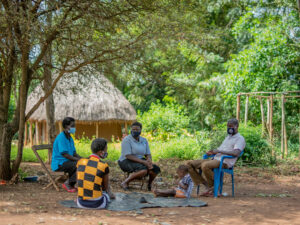
In December 2023, m2m received funding from GlaxoSmithKline (GSK) to implement a vital project titled ‘Building Commitment and Capacity to End TB and Malaria’ in Lesotho and Uganda. This initiative seeks to strengthen TB interventions in Lesotho while simultaneously addressing TB and malaria in Uganda.
Both Uganda and Lesotho face urgent TB challenges, making this programme a critical intervention:
- Each day, close to 240 people fall ill with TB in Uganda and, approximately 30 lose their lives. More than half of TB-related deaths in the country are among people living with HIV. Limited health care access and awareness contributed to high morbidity and mortality from both TB and malaria.
- In Lesotho, which has the second-highest TB incidence globally, gaps in health care services, meant that many people face delayed diagnosis and treatment, worsening the dual burden of TB and HIV.
Having partners like GSK who understand that investing in TB programmes and locally- and community-led solutions such as m2m’s Mentor Mother Model is critical to spreading the health knowledge that families need to stay healthy while also building a bridge to health care for those who need it.
DELIVER: Making tangible strides towards ending TB in Lesotho and Uganda
From January to December 2024, m2m Peer Mentors and Nurses in Lesotho provided a full range of TB services, including awareness campaigns, prevention efforts, screening, diagnosis, treatment, and psychosocial support. By combining peer support, clinical care, and health systems strengthening efforts, m2m ensured that services met the community’s needs. And the results show the true impact that their work is having:
- In Lesotho: m2m successfully tailored our TB interventions to fit the specific cultural contexts of communities by actively engaging stakeholders such as the National Tuberculosis and Leprosy Program (NTLP) and local leaders.
- As a result, 21,700 individuals received TB services, reaching over 350% of the projected targets.
- In Uganda: m2m Peer Mentors helped families understand TB symptoms, screened for cases, and tested those at risk, even going into remote areas to ensure no one was left behind. m2m also worked with the Ministry of Health and other partners to target the hardest-hit areas.
- As a result, m2m Uganda reached and served 84,234 unique individuals—223% of our target—with both malaria and TB services.
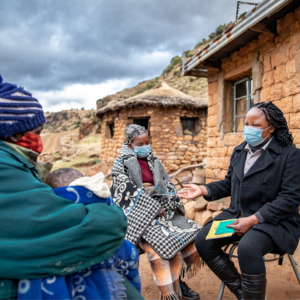
Behind these numbers is a real impact on human lives and stories like that of Lehlohonolo, a 69-year-old man from a remote village in Lesotho, who had fallen seriously ill but assumed his persistent cough and weakness were just a common cold.
“I went to the clinic, and after the nurse took my medical history, I was advised to test for TB. I was sent home to wait for my results, but my condition got worse. I couldn’t return to the clinic because it’s far, and I live alone. I became so weak that I couldn’t get out of bed and feared I might die alone,” Lehlohonolo recalled.
Thankfully, a team of m2m Peer Mentors visited Lehlohonolo at home with results that confirmed he had TB, and helped him get the health services he needed and deserved.
The work and impact of m2m Peer Mentors on their communities demonstrate the power of grassroots action and strong partnerships. As we mark World TB Day, let us reaffirm our dedication to a future where TB is no longer a public health threat—because, together, Yes! We Can End TB.