Partnering for Health: How mothers2mothers is Supporting the DRC’s Journey to Health for All
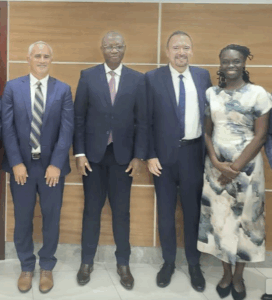
In the Democratic Republic of Congo (DRC), access to health care—particularly in rural and underserved areas—remains a significant challenge. But thanks to an innovative partnership between mothers2mothers (m2m) and the Ministry of Health, the country is making meaningful strides toward Universal Health Coverage (UHC).
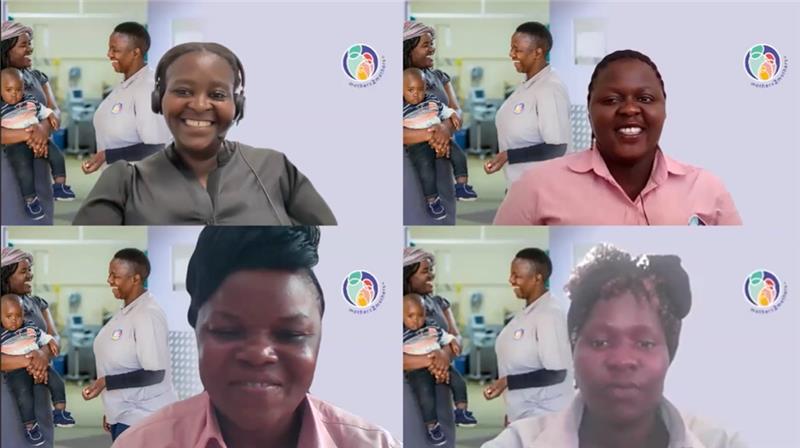
At the heart of m2m’s approach is the belief that health care is most effective when it’s delivered by those who deeply understand the communities they serve. That’s why m2m trains and employs local women living with HIV as community health workers to provide vital health services in under-resourced clinics and directly in people’s homes.
Today, m2m is bringing more than 20 years of experience to help transform how healthcare is delivered in the DRC, moving from fragmented, volunteer-based services toward a paid and professionalised community health workforce.
The DRC’s Health Landscape: A System Ready for Change
In recent years, the DRC has taken bold steps to improve health outcomes through the 2021–2023 Government Action Programme and the National Strategic Development Plan, both of which aim to reduce health disparities and expand access to care.
But challenges remain. Health facilities are often overstretched and under-equipped. Poverty, poor infrastructure, and limited access to medicines are significant barriers, especially in rural areas. Community health services rely heavily on unpaid volunteers, which leads to inconsistent care.
The consequences are stark: the Ministry’s nutrition authorities report that 42% of children in the DRC are chronically stunted, with malnutrition contributing to nearly 45% of deaths in children under five. Recognising the need for urgent change, the Ministry of Health turned to experienced partners like m2m to help build a stronger, more equitable health system.
m2m’s Role in the DRC: Strengthening Health Systems
m2m brings decades of experience delivering high-impact, scalable community health programmes across sub-Saharan Africa. In the DRC, we are supporting the government to professionalise its community health workforce—ensuring CHWs are trained, accredited, and paid for the essential services they provide.
Our efforts focus on two strategic objectives:
1. Supporting Policy Change for Paid, Professional CHWs
In 2024, m2m co-established a national Technical Working Group in partnership with the Ministry of Health and other stakeholders to help shape and implement policies that formally recognise and remunerate CHWs. We also led the Training of Trainers for the new CHW policy rollout, working with provincial health authorities and district health zones to ensure high-quality, consistent training and supervision.
To strengthen collaboration, m2m and Village Reach co-founded the DRC chapter of the Community Health Impact Coalition (CHIC)—a platform that brings together key actors to share knowledge, coordinate efforts, and advocate for long-term investment in CHW programmes.
2. Establishing Certification and Accreditation Pathways
Professionalisation is about more than just pay—it’s also about quality, recognition, and a clear career path. That’s why m2m is leading the development of certification and accreditation systems for CHWs. In collaboration with the General Directorate for Organisation and Management of Health Services (DGOGS), UNICEF, and PATH, we are working to standardise training curricula, develop evaluation tools, and create frameworks that ensure CHWs have the knowledge and support they need to succeed, and are certified as a result.
m2m’S APPROACH TO HEALTH SYSTEMS STRENGTHENING (HSS)
m2m’s work in the DRC is part of our broader commitment to health systems strengthening, one of the pillars of our 2022–2026 Strategic Plan. Our efforts are aligned with the World Health Organization’s six building blocks of health systems—which incorporate service delivery, workforce development, health information systems, access to essential medicines, financing, and leadership.
Across sub-Saharan Africa, m2m provides targeted technical support to governments in areas such as digital health, monitoring and evaluation, training standardisation, and policy development. Our peer-led Mentor Mother Model has already been integrated into national policies in countries like South Africa, Kenya, and Mozambique. Through coalitions like CHIC and the Frontline Health Workers Coalition, we continue to champion the professionalisation of CHWs across the continent and in global spaces.
Partnership in Action
We are proud to stand alongside the Ministry of Health, DGOGS, PATH, and UNICEF in this journey. Our thanks also go to ViiV Healthcare, whose generous support enabled the initial phase of this vital work in the DRC.
Together, we are proving that professional, community-based healthcare is not only possible—it is essential. Because the foundation for transformative health results is right there in the community—waiting to be trained, supported, and recognised.