m2m’s Takeaways from the 80th UN General Assembly Week

 Against a backdrop of growing geopolitical tensions and abrupt funding cuts to global development, the mood at this year’s United Nations General Assembly (UNGA) was markedly sombre. Yet a strong sense of resolve endured. The determination of so many in attendance—and beyond—to keep delivering for those most in need served as a powerful reminder of the global community’s unwavering commitment and tireless efforts to building a healthier, fairer world.
 So what were m2m’s key takeaways from #UNGA80?
We are at a pivotal moment to invest in domestic health leadership and local capacity
This year has seen a worrying trend of historical donors moving away from their long-standing support and funding for life-saving health services and treatments. But with this shift also comes a critical window of opportunity for low and middle-income countries to chart their own course towards more leadership and financial ownership over their own development—and African governments are answering the call.
Health leaders from Sierra Leone, Mozambique, and Kenya were clear during the annual Community Health Impact Coalition UNGA breakfast about their need and desire to prioritise their country’s needs, especially when it comes to health. They notably reiterated their commitment to integrating paid, supported, and recognised community health workers (CHWs) into their domestic plans for national health delivery, and shared their successes to date. NGOs and implementing partners have a critical role to play in building this local capacity and ownership, and to build sustainable systems—and m2m is determined to play our part.
At m2m, we know that when local female CHWs lead, communities get what they need, and so we welcome the commitments from Sierra Leone, Mozambique and Kenya. Since 2001, we have trained and employed over 12,000 female CHWs to support their communities to take control of their own health and future. We have also been advocating for and partnering with governments to ensure CHWs and primary health care (PHC) are recognised as critical components in resilient health systems and for the delivery of health for all.
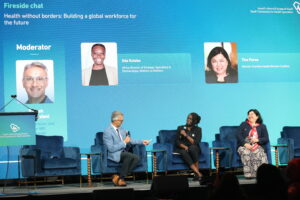
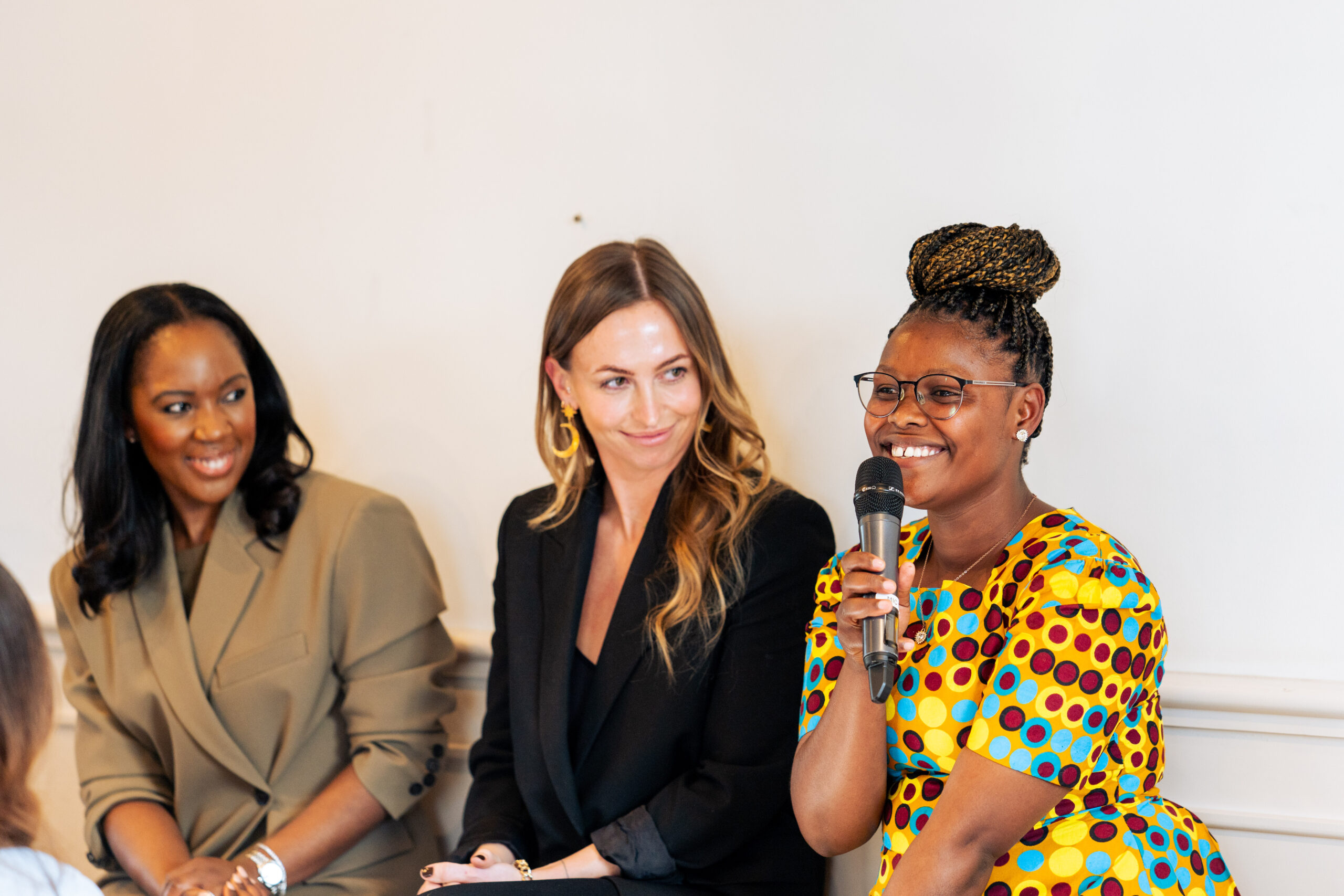
As m2m’s Africa Director of Strategic Operations & Partnerships, Ilda Kuleba, reminded the audience at Devex’s ‘Health without borders: Building a global workforce for the future’, hosted by Saudi Commission for Health Specialties: “When we talk about CHWs and health systems strengthening, we’re talking about a proven-life saving investment—not a cost. We cannot expect to have healthier communities if we are not putting money into building the systems that deliver health for all.”
Investments need to deliver more impact than ever. The integration of services and forging of new partnerships will be key as we do more with less.
“With the significant shifts in Overseas Development Assistance, the integration of PHC and pandemic preparedness have to come together more than ever—all of which is underpinned by CHWs and the health workforce.” Hon. Meskes Daba, Minister of Health from Ethiopia, speaking at a Management Sciences for Health (MSH) event.
The cuts and changes to the way global health is funded and delivered will—and already do—clearly require governments, funders, NGOs, and implementers to “do more with less”. So it was not surprising—but very welcome—to see so much attention and discussions during UNGA Week focused on the ever more urgent need for better and more comprehensive integration of services and the building of a stronger and more resilient health workforce.
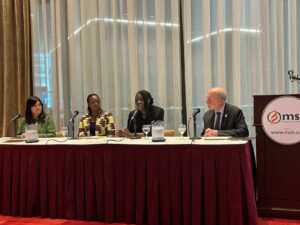
As Anita Asiimwe, Portfolio Director at MSH and former Rwandan Minister of State in charge of public health and PHC, reminded us: “We must focus on the people, not the condition. Don’t fail to look ahead even if the resources you have are limited. Find the right partnerships that will help you on this journey.”
This year’s conversations also made clear that the fights for climate resilience, health equity, and gender equality are deeply interconnected—and there is an increasing desire across sectors for new and innovative partnerships to tackle them together and break traditional silos. Not only do we need to integrate health services through PHC, the integration of these agendas will also be key as a powerful truth is gaining traction: the climate crisis is a health crisis. Rising temperatures, extreme weather, and the resulting shifts in migration flows are already threatening lives and straining health systems, especially in vulnerable communities. Integrating these agendas isn’t just strategic—it’s essential for building a more resilient and equitable future.
Big announcements took the spotlight, but turning these into rapid action is more urgent than ever.
Alongside the major convenings and conversations that define UNGA Week, a number of significant announcements were made.
- The long-awaited UN High Level Meeting on Non-Communicable Diseases (NCDs) and the Promotion of Mental Health ended without a resolution, but did include a recognition that globally women comprise approximately 70% of the health workforce and that women face a double NCDs burden. m2m also welcomes that the Political Declaration recommends integrating prevention, care, and screening of NCDs into “existing programmes for communicable diseases, maternal and child health, and sexual and reproductive health programmes.” While the Declaration failed to explicitly recognise CHWs as critical stakeholders in the delivery of NCD and mental health services and while it is still to be adopted, it was still an important moment to shine a spotlight on NCDs and mental health and the need for integrated services.
- The recently released America First Global Health Strategy was also a major topic of discussion as stakeholders continue to redefine collaboration with the current United States (U.S.) government. At m2m, we welcome the Strategy’s commitments to ending mother-to-child transmission of HIV, and to investing in CHWs, as well as the Strategy’s focus on integrated health services. However, at this time of transition, we must recognise that progress will require stakeholders to work closely with, and support, national governments as they move toward long-term country ownership. Trusted local organisations such as m2m working with CHWs must be part of the solution so that high-impact models can rapidly be scaled and the capacity of trained frontline staff can continue to be harnessed to meet ambitious health goals.
- Under two separate partnerships announced at UNGA, India-based generic manufacturers are expected to bring down the price of the much-awaited HIV prevention drug lenacapavir at $40 per person per year for 120 low- and middle-income countries by as early as 2027. This would be the same price as a year’s course of daily oral PrEP, and so could be a significant step forward in making this vital medication more affordable and accessible to those who need it most. We at m2m stand ready to help with the roll out, and we know that trusted CHWs, like m2m’s Mentor Mothers, will be essential to provide education, drive demand, dispel myths, and ensure access.
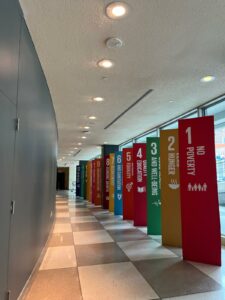
We face significant challenges, but the global health community—and m2m—are more determined than ever to deliver health for all.
It is undeniable that these last few years, and especially this year, have been extremely challenging for the global health sector as we battle global pandemics, rising geopolitical and economic tensions, and funding cuts that are redefining the way global health is funded and delivered. It has been an extremely painful year for the sector, including for us at m2m for our clients and our frontline team. But amid the pain, uncertainty, and upheavals, we were heartened and energised to see a global health community that is
still hopeful, still fighting, and looking for ways to move forward. Because we all know that we simply can’t stop, and we won’t stop.
Be sure to sign up to our newsletter and email [email protected] if you wish to explore partnership opportunities.