Takeaways from the World Health Summit: Rethinking How We Fund and Deliver Health for All
This year’s World Health Summit (WHS) was full of urgent conversations and tough questions about how we fund, build, and sustain stronger health systems. From the financing gaps to the future of community health, one theme stood out: sustainability starts at home—but it takes all of us. 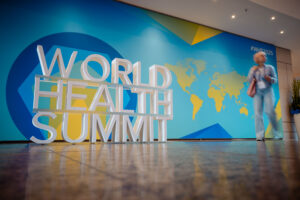
Here are four key insights m2m brought home from WHS.
Domestic Health Financing: Building Health from Within
If there was one phrase that kept coming up, it was ‘Domestic Health Financing’. The message was clear: countries need to invest more in health—and not rely solely on external donors or private investors.
The real question is—how can countries with already tight budgets realistically do more?
Innovative ideas surfaced: strengthening tax collection, introducing or expanding “sin taxes” on sugar, alcohol, and fuel, and linking these directly to health outcomes. The concept is simple—tax what harms health, and reinvest in what strengthens it.
The takeaway? It’s not just about finding new money—it’s about building sustainable, homegrown systems that make every cent go further and deliver lasting impact.
Partnering with Governments: From Coordination to Co-Ownership 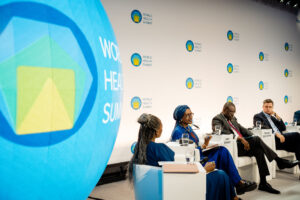
A major shift in global health financing is underway. Funding is moving from global intermediaries to direct partnerships with governments. That means national governments will—rightly—increasingly decide how priorities are set and resources are allocated.
This shift brings opportunity—if done right. Greater government ownership can drive long-term sustainability—but only if communities are genuinely heard in the process. This is where civil society organisations (CSOs) like m2m come in: we bring local knowledge, trust, and accountability—qualities that help ensure health policies reflect real community needs, not just national plans on paper. And with m2m’s decades-long experience of partnering with governments, we stand ready to play out part.
To get this right, the global health community needs to move beyond coordination to co-creation—with governments, CSOs, donors, businesses, and communities shaping health plans together.
The Civil Society Funding Crunch: A Crisis in the Shadows
While much attention has gone to government funding gaps, the World Bank’s Global Partnership for Civic Engagement spotlighted a quieter, but equally as urgent, emergency: the civil society funding crisis.
CSOs are the backbone of community health—reaching where governments often can’t. Yet, their funding, including m2m’s, is shrinking just as demand for health services rises even more. This isn’t just a CSO problem; it’s a systems problem. No resilient or inclusive health system can exist without a strong, well-funded civil society.
The solution? Governments, donors, and global partners must ensure that civil society is funded, protected, and empowered—not sidelined. Because when CSOs falter, entire communities lose access to care.
Community Health Workers: The Beating Heart of Primary Care
Community Health Workers (CHWs) took center stage as the unsung heroes of health systems. Across diverse discussions, CHWs were celebrated as the backbone of primary health care and the first line of defence for millions.
Speakers emphasised the urgent need to professionalise and adequately support CHWs, with fair pay, training, and recognition—something that has proudly underpinned m2m’s Mentor Mother Model since our creation in 2001. As countries move toward integrated health systems that tackle both communicable and noncommunicable diseases, CHWs are the critical thread holding it all together.
Encouragingly, the Global Fund is already acting. Its CHW Programme Maturity Assessment, underway in 15 African countries, where it is working with governments to mapwhere systems are strong and where it needs investment. The goal: for countries to be equipped with data and tools to strengthen existing CHW programmes and plan for better support CHWs ahead of the Global Fund’s Eighth Replenishment.
The message was clear: invest in CHWs, and you invest in the entire health system.
Final Thought: Shared Responsibility for Shared Health
The World Health Summit reminded us that global health is a shared responsibility.
Governments must step up with domestic financing. Donors must stay engaged. And civil society must remain strong and funded. Because building resilient health systems isn’t about who pays—it’s about how we all work together to make sure health for all becomes more than a slogan—it becomes reality.