How Solar Power is Transforming Maternal and Newborn Care in Nigeria
The room was quiet except for the cries of a newborn—and the dim glow of a mobile phone torch. For years, this was the reality for women giving birth at night in parts of Nigeria’s Federal Capital Territory (FCT). Midwives or clinical staff worked in the shadows, stitching wounds or checking tiny chests for breath with little more than a flicker of light to guide them.
It wasn’t just undignified—it was dangerous. Poor visibility made urgent procedures harder, delayed life-saving interventions, and left mothers fearful as they brought new life into the world.
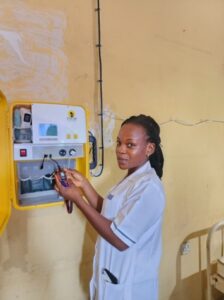
Today, that story is being rewritten. Thanks to a partnership between mothers2mothers (m2m) Nigeria and We Care Solar, delivery rooms in four busy primary health centres (PHCs) now shine brightly, powered entirely by the sun. As part of the collaboration, m2m conducted a needs assessment across five PHCs, selecting four that met agreed criteria (high patient volume, 24-hour service, and committed leadership). m2m staff and Mentor Mothers participated in a two-week training alongside local installers so they could support installation, monitoring, and troubleshooting of the new systems. Today, Mentor Mothers continue to track use of the solar suitcases and report issues to m2m, who liaises with We Care Solar for quick resolution.
And the difference is being felt every single night.
From Torches to Bright, Reliable Light
Before the solar suitcases arrived, PHCs depended on Nigeria’s often unstable national grid. Outages were common and could last hours or even days. At night, midwives often had no choice but to perform emergency procedures with only the light from their phones.
“It wasn’t just about poor visibility,” explained one midwife, Anna. “It was about the fear of making a mistake when you couldn’t properly see the mother or baby, or safely manage emergencies. We could also see the overall confidence in PHCs declining as a result.”
For many expectant mothers, the experience was just as frightening. Some delayed going to a facility until morning; others chose to deliver at home despite the risks.
Why m2m Got Involved
At m2m, our mission is to ensure every woman, child, and family can access the best quality health services when they need them most. During community visits and routine facility monitoring in the FCT, Mentor Mothers and staff kept hearing the same concern: women felt unsafe giving birth at night because of unreliable electricity.
By stepping in, m2m helped close a critical gap in maternal care—ensuring that facilities where we already work are safer, more trusted, and better equipped to serve women and their families at all hours.
Early Results: Safer Care, Growing Confidence
Since the installations, health workers report quicker responses to emergencies, better infection control, and more precise work at night. Facility records show more women are choosing to deliver at night in PHCs—a sign of growing community trust. Facility leaders have seen the difference first-hand. At Paiko Kore PHC, Facility in Charge—Essien Akon, noted how the equipment improves both maternal care and other essential services: “The solar installation has enabled us to work at night even when there is no electricity supply, allowing us to also carry out other procedures such as cervical cancer screening and IUD insertions using the rechargeable headlamp.”
At Bwari Town Clinic, Facility in Charge—Felicia Bitrus, highlighted the reduction in stress and running costs: “Since its installation, the cost of electricity has reduced, and our labour has become much less stressful. We no longer worry about light outages or resort to using torchlights during work, and we can now conveniently charge our phones when needed. We are truly grateful to m2m for the remarkable work they are doing in our facility.”
For these PHCs, light isn’t just about visibility—it’s about safety, dignity, and trust. This partnership between m2m Nigeria and We Care Solar shows what’s possible when innovation meets community commitment. With something as simple as reliable light, lives are being saved—every single night.
Sign up today to our newsletter to receive updates of our work with women, children and families straight to your inbox.