Cooking Skills and Community Key to Fighting Malnutrition in Mozambique
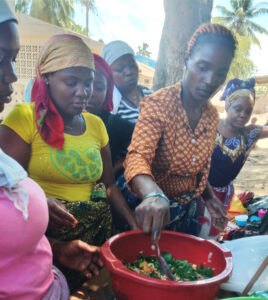
Maria* stirs a pot of vibrant green vegetables with a newfound confidence. Just a few months ago, the 32-year-old mother from Mozambique’s Cabo Delgado province was worried about putting enough food on the table to feed her family. Displaced by conflict and facing the challenges of raising a young child, healthy meals often felt like a distant dream.
Along with other mothers and their families in the region, Maria* found hope in the form of cooking demonstrations and radio information sessions under the mothers2mothers (m2m) nutrition pilot project, as part of m2m’s participation in the World Food Programme (WFP) Innovation Accelerator in 2023. The project addressed the specific nutritional needs of pregnant and breastfeeding mothers, infants, and families living with or at risk of HIV in Cabo Delgado.
Mozambique faces a significant burden of HIV and malnutrition. The country ranks second globally for HIV prevalence, with widespread micronutrient deficiencies and high rates of stunting among children under five. The ongoing military conflict in Cabo Delgado further exacerbates these challenges, displacing hundreds of thousands of people and disrupting food security.
 The nutrition pilot project brought an innovative approach in linking a nutrition component to existing HIV prevention and treatment services provided by m2m Mentor Mothers – local women living with HIV who are deployed to health facilities and communities to provide integrated health services and education to other women and their families.
“Before the project, I didn’t know much about healthy eating,” Maria* admits. “But the cooking demonstrations were amazing! We learned how to use simple ingredients and turn them into a delicious meal.”
Another client who benefitted from the programme and the new skills she developed is Ana*, who started a business to generate a source of income for her household. Inspired by the cooking demonstrations, she started a small business selling bean fritters, a local delicacy in her community. “I was unemployed when I joined the cooking classes, but a facilitator encouraged me to start a business. This project gave me the confidence to become self-sufficient.”
By integrating nutrition and social protection interventions, m2m demonstrated a cost-effective and scalable approach to combat malnutrition and support communities affected by HIV. The m2m nutrition pilot reached 5,000 individuals, and paves the way for expanding similar programmes to other provinces in Mozambique and beyond.
This collaboration between WFP and m2m, through the WFP innovation accelerator, is a testament to our shared commitment to empowering mothers, nurturing futures, and creating a lasting impact on community health to ensure that every mother and child in Mozambique has access to the resources they need to lead healthier and thriving lives.
*To ensure the safety and privacy of our clients, all names in this blog have been changed and pseudonyms are used.