South African Women’s Day ‘State of the Nation’ Address by Nozi Samela
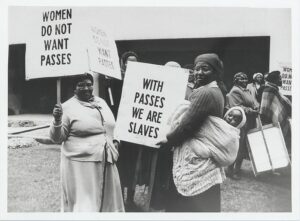
This Women’s Day, we honour and celebrate the unwavering strength and resilience of South African women. As we reflect on our country’s journey, we are reminded of the profound words that echoed through the streets of Pretoria on 9 August 1956 when 20,000 courageous women marched against the oppressive apartheid pass laws that restricted their freedom of movement: “You strike a woman, you strike a rock.”
South African Women’s Day stands as a testament to the indestructible spirit of these women who fought valiantly for freedom and equality, and at mothers2mothers (m2m) we pay homage to this historic day by recognising the extraordinary contributions of women amid the ongoing struggle for health equity and gender equality in our country.
Addressing the Challenges Faced by Women in South Africa
Despite our significant progress, violence against women and girls remains a harrowing reality, and, according to the World Population Review for 2023, South Africa ranks among the top six countries with the highest femicide rates globally.
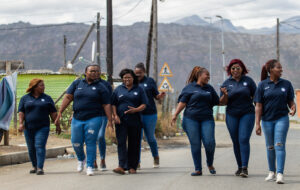
m2m has made major strides in addressing the primary healthcare needs of the families we serve, particularly women and girls, however, the feminisation of HIV and AIDS and poverty continue to pose significant challenges. Women and girls in South Africa, and many other countries in sub-Saharan Africa, are disproportionately affected by HIV compared to their male counterparts. Maternal and child mortality rates in sub-Saharan Africa remain unacceptably high.
Moreover, countries in sub-Saharan Africa face the double disease burden of communicable diseases like malaria and tuberculosis in addition to the non-communicable diseases like hypertension and diabetes that are also prevalent in developed nations. The burden of caring for sick family members often falls on women, further highlighting the need for comprehensive support systems.
Ultimately, efforts to achieve health for all are failing people on the African continent. 615 million people on the African continent do not have access to the healthcare they need, and lives are needlessly being lost to diseases the world knows how to prevent and treat.
The Role of mothers2mothers in Addressing Gender Inequities
At m2m, we firmly believe in the transformative power of women. m2m Mentor Mothers—women living with HIV who are trained and employed by m2m as community health workers—work tirelessly to educate and support women and families in their communities to access, start, and stay on the health care they need to thrive.
It is through meeting these phenomenal women 19 years ago that I was able to overcome my own HIV diagnosis, start treatment, and stay in care. I have since given birth to three healthy and HIV-free children, a story that m2m has replicated millions of times over in 12 African countries in their two decades of impact.
In m2m’s 22 years of existence, more than 12,000 Mentor Mothers have reached over 16 million people with life-changing health services, helping to keep alive over three million at risk-women and children. At m2m, we believe that strong health systems are those that respond to the needs and challenges of people and communities.
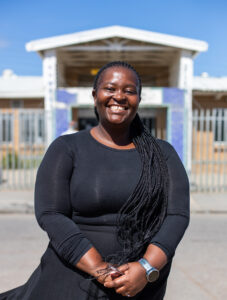
Today, I am celebrating completing my second degree since I joined the organisation, an achievement made possible by adequate and fair payment to all of m2m’s community health workers. I am raising daughters with dreams so big they frighten me because women before me laid the foundation.
A Call to Action: No Room for Complacency
As we celebrate South African Women’s Day, let us reflect on the remarkable strides we have made and the journey that lies ahead. Since that historic march in 1956, South African women have achieved tremendous progress in various fields.
However, we cannot afford complacency. South Africa has the highest number of people living with HIV in the world, is among the top six countries with the highest femicide rates, and violent crimes against children are reported every day. This is not a reality I want to be raising my daughters in. We must continue to champion the rights and well-being of women and girls with unwavering dedication. Together, we can build a world where families, regardless of where in the world they live or the colour of their skin, can live with dignity, freedom, and hope.