Healthy Beginnings, Hopeful Futures Delivered by Women on the Frontline
Today is an important day on the mothers2mothers (m2m) calendar for two reasons. It’s the last day of World Health Worker Week, which this year has focused on the urgent need for greater recognition and investment in health workers who are on the frontlines of care. It’s also World Health Day, which this year is focused on urging governments and the health community to ramp up efforts to end preventable maternal and newborn deaths, and to prioritise women’s longer-term health and well-being.
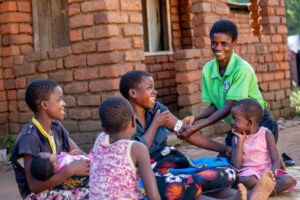
Why do these days resonate with us? Both embody the core of m2m’s community-led, peer-based work. We know local female health workers—who are paid, trained and recognised—are key to ending preventable deaths by ensuring that women and families in their communities access the life-saving care they need. The women employed as m2m Mentor Mothers work on the frontline to provide women with health services and education for safe pregnancies, healthy babies, and thriving families.
This work is critical in the communities we serve in sub-Saharan Africa, a region with the highest maternal and child mortality rates in the world. Our numbers tell a powerful story—m2m Mentor Mothers are helping mothers and children beat these odds:
- m2m Mentor Mothers have helped keep over three million at-risk women and children alive over the past 23 years.
- In the fourth quarter of 2024 alone, the estimated under-five child mortality rate for m2m clients was 42 times better than the regional benchmark and the maternal mortality rate for enrolled clients was 12 times better than the regional benchmark…meaning we are already achieving the 2030 SDG targets for our enrolled clients.
- m2m and our partners have achieved virtual elimination of mother-to-child transmission of HIV among enrolled clients for 10 consecutive years, with a transmission rate of 0% last year.
That’s worth celebrating—today and every day! And, continuing to invest in and support these remarkable health workers is more important than ever at this time of turbulence in foreign assistance.
Meet Isabel
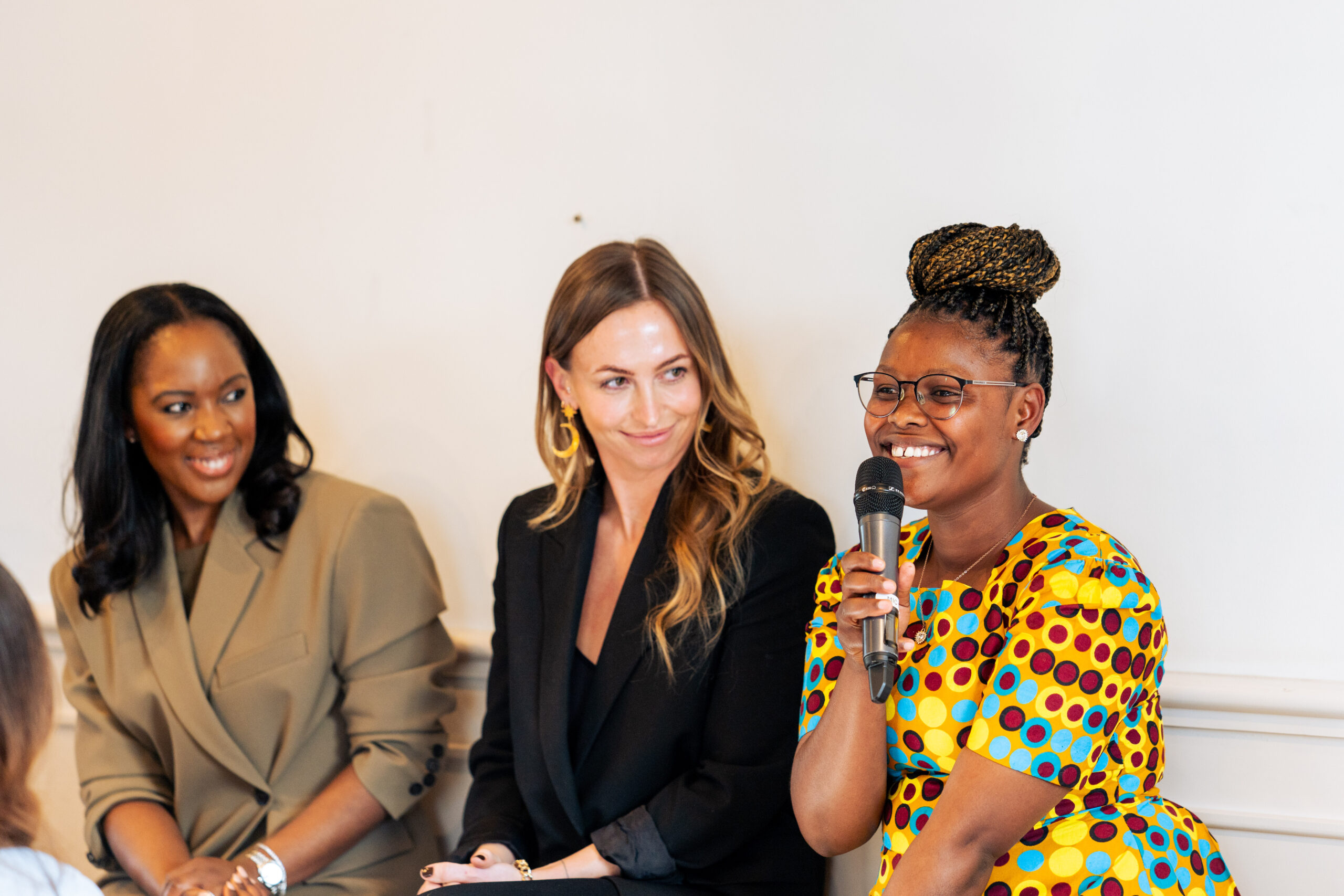
The women behind these numbers also have powerful stories to tell—such as Isabel, an m2m Community Coordinator and Mentor Mother in Mozambique.
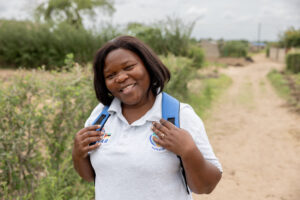
Isabel understands these challenges all too well. When she tested positive for HIV in 2017 during her first antenatal check-up, she says her husband was furious because he said he was negative. This caused her to doubt her diagnosis and not take her medication at first. Fortunately, she realised that her unborn baby’s health and life depended on her and she started treatment.
Her story of courage and hope helps Isabel inspire women to start their journey to good health. “I tell them to fight to live, to think about their children, and to look at me as an example,” she says.
That’s the approach she took with her client Fatima. Isabel says after Fatima tested positive for HIV she refused to take her ARVs because she wanted her child to have the same “thing” as her. Isabel visited Fatima every week to remind her of the risks to her unborn child, and even took her own ARVs alongside her as encouragement. Isabel says all of her efforts eventually paid off: “In the end, Fatima committed to her treatment. Today, she has a healthy, HIV-free son, and I am honoured to be his godmother.”
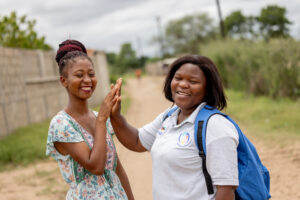
Since m2m came to her community, Isabel has seen improvements—people are now getting accurate information, HIV-related stigma has been reduced, and the demand for knowledge is growing. “I receive calls late at night from women who are curious, who want to live, and who dream of a better future…. I am proud to be part of this journey,” she says.
She and her fellow Mentor Mothers are even working to ensure women do not have to depend on anyone when it comes to their health. They started a small community project where clients grow vegetables and sell cold drinks, and women use some of the money they make to cover transportation costs to the clinic.
By investing in frontline health workers like Isabel, we’re not just improving individual lives—we’re driving transformational change. Today, and always, a world where every woman and child has the chance to thrive starts with the health workers on the frontline.