Three Key Takeaways from the 2025 World Health Assembly
Last week, mothers2mothers (m2m) attended the World Health Assembly (WHA) —an annual meeting of the global health community at and around the World Health Organization (WHO) headquarters in Geneva.
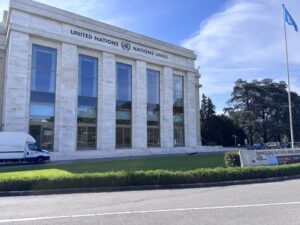
This year’s WHA unfolded against a sobering backdrop: the United States (U.S.) government has dramatically scaled back life-saving foreign aid, announced its intention to withdraw from the WHO, and to cut or eliminate funding to key United Nations (UN) agencies like UNAIDS and UNFPA. Other major donors, including the United Kingdom and Germany, have also reduced overseas development assistance (ODA). The impact and devastating consequences of these seismic changes in the historical landscape of global health funding have been keenly felt by m2m. In addition, and for the first time since 1948, there was no official U.S. delegation at WHA. These developments loomed large, shaping both formal sessions and corridor conversations—many of which centered on shuttered programmes, job losses, and budget shortfalls. Attendance was visibly down from previous years.
Yet, amid this uncertainty, there was also resolve—and progress. After three years of negotiation, member states reached a landmark agreement on a legally binding pandemic accord. While further work is needed—especially on the Pathogen Access and Benefit Sharing system (PABS)—the accord marks a significant milestone in global health cooperation.
Here are m2m’s top takeaways from the week:
A New Era of Government-NGO Collaboration
Session after session highlighted the imperative for national governments to take the lead in redesigning health systems in response to changing ODA dynamics. Many government representatives spoke openly about inefficiencies caused by many ODA models—such as vertical delivery of services and poor coordination among externally funded partners—and their excitement about the opportunity to do things differently moving forward.
To build more sustainable, people-centered systems that leave no-one behind, governments and NGOs must now work together in new and deeper ways in this new era. With our long track record of deep collaboration with governments, m2m stands ready to play our part.
Innovation with Urgency
Innovation was a major theme, with much attention given to integrated service delivery, new financing models, and digital health tools. While finding new, more cost-effective ways to deliver and finance health care is essential, we can’t ignore the reality that cuts to ODA have left millions without access to critical health services. At m2m alone, cuts to projects previously funded by the United States have left more than 650,000 people without the health services we provided under these awards. These people—and many millions more around the globe—can’t wait for innovative solutions to arrive. Innovation must be pursued urgently—but it must also be coupled with interim measures to ensure no one is left behind. Lives are on the line.
Payment for results—it’s about time.
Results-based financing emerged as a key strategy for the future—and we welcome the shift. m2m brings years of experience with performance-linked funding, including social impact bonds, and we’re eager to do more to scale effective, accountable solutions that reduce financial risk for governments with limited fiscal space.
To stay abreast of these updates and follow our work, sign up to our newsletter today.