Day of the African Child: Why South Africa’s HIV Progress Is Failing Many Young People
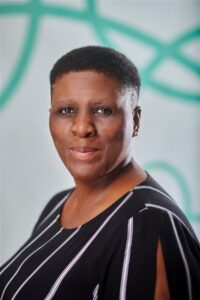
By Babalwa Mbono, Communications and Advocacy Officer at mothers2mothers (m2m). Babalwa also serves as the Global Alliance Community Champion to End AIDS in Children in South Africa.
Every year on 16 June, South Africans commemorate the Day of the African Child and honour the courage of the young people who stood up for dignity, equality and opportunity during the 1976 Soweto Uprising.
Nearly 50 years later, many young people continue to face barriers that limit their ability to thrive. Today, one of those challenges is South Africa’s growing HIV treatment gap.
South Africa’s HIV Progress Masks a Growing Treatment Gap
South Africa has made remarkable progress in the fight against HIV. The country now operates the largest HIV treatment programme in the world and has achieved an HIV treatment cascade of 96-79-97, meaning most people living with HIV know their status and those on treatment are achieving viral suppression.
Yet significant gaps remain.
An estimated 1.1 million South Africans who know they are living with HIV are not currently receiving treatment. Children and young people are among those being left furthest behind. Only 63% of children under 15 living with HIV are receiving treatment, while adolescent girls and young women continue to account for a disproportionate share of new infections, with approximately 1,100 acquiring HIV every week.
These figures tell a much bigger story than healthcare alone.
They reflect the realities of poverty, inequality, stigma, violence and limited access to services. They represent young people who miss clinic appointments because they cannot afford transport, adolescents who fear discrimination, and young mothers trying to balance childcare, unemployment and their own health needs.
The Human Reality Behind the Numbers
At mothers2mothers (m2m), we see these realities every day.
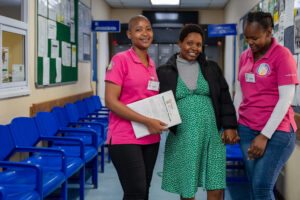
Our Mentor Mothers, women living with HIV who are trained and employed as community health workers, support children, adolescents and families to stay connected to care and navigate the challenges that often stand between them and good health.
One of those Mentor Mothers is Yolanda Tuswa.
During a postnatal home visit, Yolanda met a young mother living with HIV who had stopped taking treatment while breastfeeding. Fear, stigma and instability at home had caused her to disengage from care.
“I made it my mission to help her,” Yolanda recalls. “I ensured she left the clinic with her medication and truly understood the importance of loving and taking care of herself.”
Today, that young mother is back on treatment and her four-month-old baby remains HIV-free.
Stories like this remind us that healthcare is not only about medicine. It is about trust, support and human connection.
Why Community-Led Healthcare Matters
For many adolescents and young people, remaining on treatment is not simply about accessing medication. It is about having someone who can walk alongside them through uncertainty, stigma and crisis. Community health workers help bridge that gap by providing treatment support, psychosocial care, household follow-ups and referrals, while building trust between communities and healthcare services.
A Call to Action for South Africa’s Children and Young People
On this Day of the African Child, we must do more than remember the struggles of the past. We must confront the realities facing children and young people today.
Government, donors, healthcare partners and communities must continue investing in what we know works: community-led healthcare, adolescent-focused services, mental health support and the frontline workers who remain the backbone of the HIV response.
South Africa’s HIV progress will not ultimately be measured by targets and statistics alone. It will be measured by whether every child and young person has the opportunity to live a healthy, dignified and hopeful life.
If we are serious about ending AIDS in children, then closing the HIV treatment gap must become a national priority.
To learn more about our work, sign up to our newsletter here.